


.png)
Address
.png)
Call/Text
.png)

Flood Insurance
.avif)
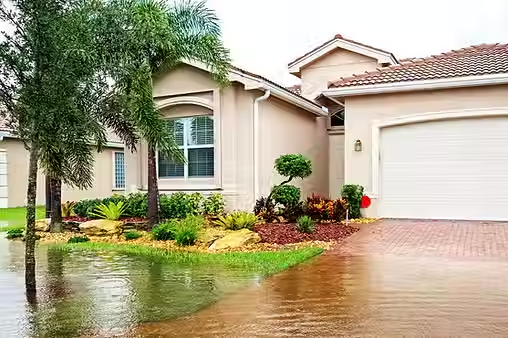
Flooding is the most common and costly natural disaster in the United States, yet many homeowners and business owners are surprised to learn that it is not covered by standard insurance policies. Just one inch of water in a home can cause over $25,000 in damage.
Flood insurance provides the specific protection you need for "rising water" events that hit your property from the ground up.
Why Do You Need Flood Insurance?
Standard Homeowners and Commercial Property policies cover "falling water" (like rain coming through a hole in the roof) but exclude "surface water" (water that touches the ground before entering your building). You need a dedicated flood policy for:
-
Rising Water Events: Protection from overflowing rivers, storm surges, or heavy rainfall that pools and enters your building.
-
Mandatory Requirements: If your property is in a High-Risk Flood Zone (Special Flood Hazard Area) and you have a mortgage, your lender will require this coverage.
-
Limited Federal Aid: Disaster grants are rare and often small, while disaster loans must be paid back with interest. Flood insurance is a guaranteed payout that you don't have to repay.
-
Low-Risk Doesn't Mean No-Risk: Over 20% of all flood claims come from areas outside of high-risk zones.
What Does Flood Insurance Cover?
Most flood policies, including those from the National Flood Insurance Program (NFIP), offer two distinct types of coverage. You can choose to buy one or both.
1. Building Property Coverage
This protects the physical structure of your home or business.
-
Covers: Foundation, electrical and plumbing systems, central AC, furnaces, water heaters, and permanently installed carpeting/cabinetry.
-
Limit: Up to $250,000 for residential; up to $500,000 for commercial.
2. Personal Property (Contents) Coverage
This protects the items inside your building. This must be purchased separately from building coverage.
-
Covers: Furniture, electronics, clothing, portable appliances (like microwaves and washers/dryers), and even freezers (including the food inside).
-
Limit: Up to $100,000 for residential; up to $500,000 for commercial.
NFIP vs. Private Flood Insurance
For decades, the government-backed NFIP was the only option. Today, private flood insurance is a powerful alternative.
Feature | NFIP (Government) | Private Flood Insurance |
|---|---|---|
Max Building Limit | $250,000 (Residential) | Can exceed $1 Million+ |
Waiting Period | 30 Days (Strict) | Often 10–14 days (or less) |
Loss of Use | Not covered | Often covers temporary housing |
Basements | Very limited coverage | Often offers broader protection |
Availability | Only in participating areas | Available in most locations |
Essential "Need to Know" Facts
-
The 30-Day Wait: Most flood policies have a 30-day waiting period before they become active. Don't wait for a storm to be on the horizon to call us!
-
Basement Limitations: Both NFIP and private policies have restricted coverage for finished basements (like drywall or carpeting). They primarily cover "functional" items like furnaces and water heaters in these areas.
-
Debris Removal: Flood policies typically help pay for the cost of removing flood debris from your property after the water recedes.
Learn why you should also consider an Umbrella policy for even greater protection
We Work With The Best
Meet The Trusted Insurance Companies Our Agency Represents